
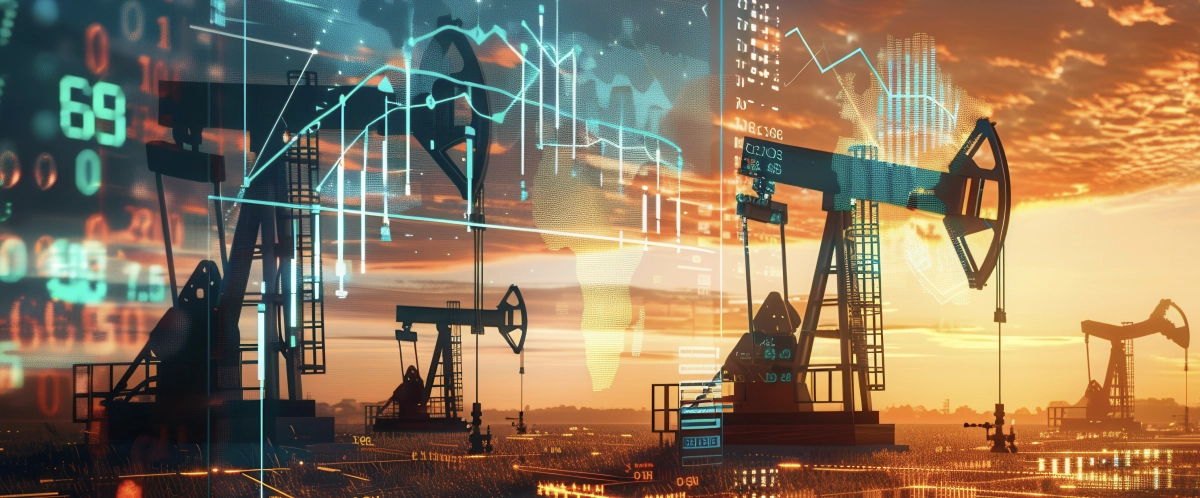
The petroleum industry has undergone a significant shift over the last two decades. Technology has transformed every aspect from exploration to delivery, in terms of making it more efficient, affordable, and eco-friendly. Technology is used in advanced software that helps in making the entire operation more efficient, affordable, and eco-friendly. It is essential to comprehend the extent to which technology has transformed the petroleum industry in order to understand the extensive shift from traditional to state-of-the-art technology.
The use of modern technology has provided solutions for many challenges that were posed over the years in petroleum operations. Employees do not rely on manual operations and estimates anymore. They make use of accurate equipment and intelligent systems that display accurate information in real time. Technology has ensured that operations in petroleum areas become more secure, swifter, and more economical. When we look into the ways technology has affected the petroleum industry, it is obvious that it has promoted continuous improvement in every area.
When considering the big picture, it becomes apparent that technology integration has made the industry on the road to sustainability for the future. Various companies invest billions in research for improved technology in order to compete favorably in the industry dynamics, which is constantly changing with time. There is no doubt that technology integration characterized by artificial intelligence, robotic systems, and renewable sources has made an assertion in the industry, indicating positive steps towards making the industry more efficient and eco-friendly in terms of power production worldwide.
Digital Transformation in Oil and Gas Operations
The digital transformation in the petroleum industry is a profound change in the manner in which organizations carry out their operations. There is an integrated use of technology that links field activities with top management in an instant.
The use of technology has also gotten rid of the many inefficiencies that were present in the industry for so long. It is now possible for organizations to view thousands of different pieces of information at the same time so that they can detect possible issues before they cause system failures that result in financial losses.
Automation and Robotics in Petroleum Extraction
Automation and robotics in petroleum extraction have made dangerous manual labor safe and efficient operations. Robots also execute dangerous tasks that were hazardous to human laborers in the industry. Robots work in harsh environments ranging from the depths of the sea to the scorching deserts on platforms that would be dangerous for human laborers to operate in.
The usage of automated drilling equipment and robotic units for inspections has greatly improved the efficiency of extraction activities. The equipment operates constantly without tiring, with an optimal performance level that is unmatchable by human personnel. There were remarkable increases in production rates and reduced safety incidents following the integration of these robotic systems in their operations by firms.
IoT Sensors for Real-Time Monitoring
IoT sensors used for real-time monitoring have become an integral tool in today’s oil and gas industry. The devices, even though small, record continuous readings on pressure, temperature, flow rates, and equipment performance. The readings flow directly into control rooms where experts immediately identify any discrepancies for corrective measures to be taken.
The integrated connections between the sensors help to build an overall understanding of an entire operation. It is possible for engineers to detect where things could be improved, make predictions for maintenance, and even streamline their operations without the need for physical visits to the location.
Cloud Computing for Data Management
Cloud technology has thus provided an appropriate solution for the massive storage required in the industry for handling its information. The industry creates petabytes of data from exploration, drilling, and production activities. Cloud technology has been able to offer scalable storage solutions for the industry’s needs.
Cloud technology has facilitated collaboration between different teams in far-flung areas. Geologists, engineers, and executives simultaneously view the same information, making decisions quickly with the useful knowledge they gain from the technology they use. Cloud technology has ended information silos that hindered operational efficiency in an organization’s operations.
Data Analytics and Artificial Intelligence Applications
The advent of applications in data analytics and artificial intelligence has made it possible for the industry to look into the future with predictive capabilities that could only be imagined a few years back. After careful analysis of existing and ongoing data, equipment failures, production schedules, and new areas for exploration can be predicted using these algorithms.
Machine learning algorithms today help with complex decision-making that took weeks for human professionals to execute. Thousands of drilling options can be processed in a matter of minutes, with the company choosing the most optimal and economical means for drilling operations. All these capabilities increase the speed of projects while avoiding the danger posed by high-cost exploration and extraction operations.
Drone Technology for Infrastructure Inspection
The technology in drones used for inspecting infrastructures has changed the way companies inspect their extensive infrastructural systems consisting of pipelines, platforms, and infrastructural facilities. The drones with high definition cameras collect pictures covering hundreds of miles within one day, which remain inaccessible to land-based inspectors.
The inspectors fly into dangerous areas without endangering lives. In addition, they give objective reports on the condition of equipment that aid in prioritizing repairs. The benefits derived from using drones for inspecting activities in the petroleum industry have made it an essential practice in the operations of the big organizations.
Environmental Monitoring Technologies
Environmental monitoring technology has become an essential part of the industry, which is increasingly challenged in its efforts to lessen its footprint on the planet. Sophisticated instruments monitor emissions, water quality, and ground disturbance in operational areas for continuous compliance with ecological standards, thus reflecting an organization’s corporate social responsibility.
The information obtained enables companies to effectively carry out strategies in their efforts to reduce their effect on the environment. Real-time warnings also allow concerned departments to receive notifications in case there is a possibility of spilling or leakage even before it becomes a disaster.
Advanced Drilling Techniques and Equipment
Technologies in drilling have opened up resources that were either inaccessible in the past or economically unfeasible to exploit then. The technology for horizontal drilling and fracking makes it possible for firms to mine petroleum from deep beneath the earth’s surface in layers of rock known as shale rock layers.
Contemporary drilling equipment is equipped with highly accurate control systems that successfully traverse rock formations with a high degree of precision. Directional drilling is also capable of reaching its target miles away from where the drilling is taking place, thus making its presence on the ground barely perceptible on the landscape.
How Has Technology Changed the Oil and Gas Industry? A Comprehensive Impact Analysis
When we look closely into the ways in which technology has altered the ever-adaping petroleum industry, it’s clear that its effect is more extensive than mere improvement in operations. There is a need for more people in the new technology industry that emerges oil, namely scientists with knowledge in software engineering skills next to petroleum engineers.
The economic benefits that these technological advancements have brought with them are significant in nature. As to the extent to which technology has affected the petroleum industry, it is apparent in the comparison between what it costs to produce today versus years back. Technology has made it possible for many fields that were commercially unfeasible to become economically viable.
Future course: more is yet to be uncovered in terms of the dramatic nature associated with these coming transformations. As we pose these questions in relation to technology’s impact on the oil and gas industry, it is also important to look at other new forms of technology associated with the management of supply chain systems using blockchain technology, quantum computing for reservoir simulation, and new materials for more efficient equipment design.
Conclusion
The technological revolution in the oil and gas industry represents one of the most significant industrial transformations of our time. From artificial intelligence and robotics to IoT sensors and drone inspections, technology has fundamentally altered how companies explore, extract, and distribute energy resources.
These innovations have delivered impressive improvements in safety, efficiency, and environmental performance while reducing operational costs. As the industry continues embracing emerging technologies, we can expect even greater advances that will shape the future of global energy production. The question of how has technology changed the oil and gas industry will continue evolving as new innovations emerge, ensuring this vital sector remains at the forefront of industrial progress.